
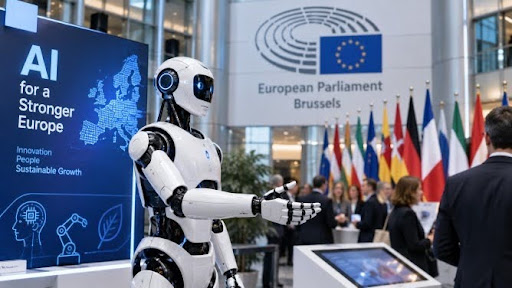
In Brussels, a showcase of AI-driven robots has spotlighted significant advancements in the fields of artificial intelligence and robotics. This event, held at the European Parliament, featured humanoid robots demonstrating a variety of tasks such as performing household chores, carrying objects, and exhibiting different movement techniques.
The showcase is particularly timely as Europe grapples with an ageing population and a shrinking workforce, driving a growing interest in technologies that can support existing workers and mitigate labor shortages. The potential of these humanoid robots to perform tasks in factories without necessitating substantial changes to current infrastructure is being closely examined by researchers.
While the technology is still in the experimental phase and under development for broader commercial application, developers are optimistic. They note that advancements in artificial intelligence are enhancing the ability of robots to comprehend their surroundings, manipulate objects, and adjust to evolving environments.
These improved capabilities could pave the way for robots to collaborate more efficiently with humans in a variety of settings, including homes, factories, and other workplaces. As AI technology continues to evolve, the integration of robots into everyday tasks may become a practical reality in the near future.